
Artist Development Matters More When You're Indie.
Am I really a power player if I'm not putting you on game?

My partners and I were named Billboard Indie Power Players this year. Congrats to us, LVRN, and everyone else who was honored. Instead of just posting a Canva graphic with one of my overused headshots, I wanted to provide some value back to the indie community I’m so proud to be apart of.
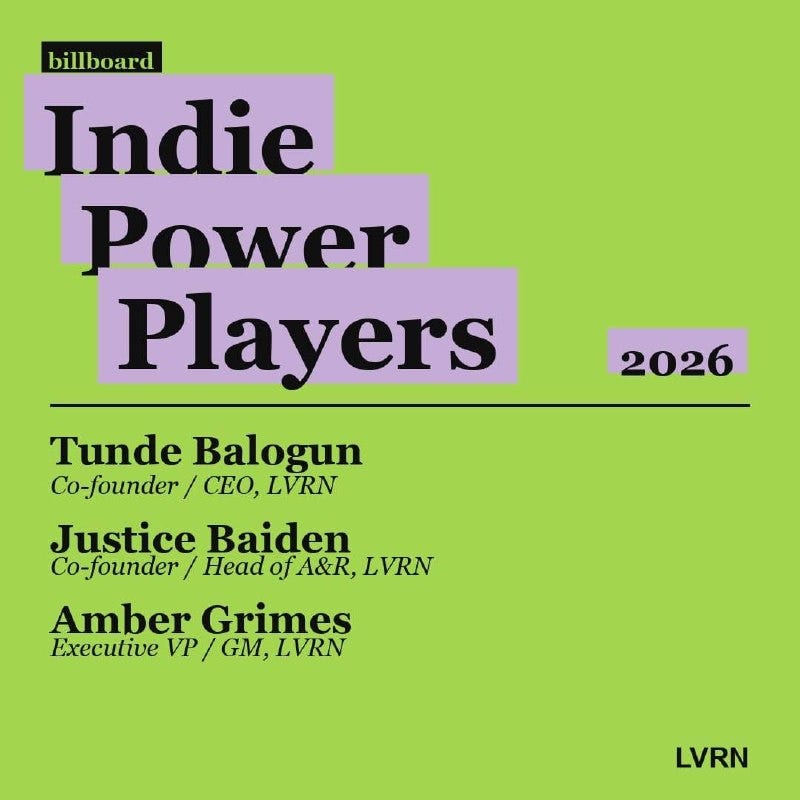
LVRN joined the independent music community four years ago. I cannot lie, the learning curve was steep but we’ve been killing it domestically and internationally. The indie space rewards a different kind of thinking than the major label world and it actually aligns with how LVRN started. Quick and scrappy decision making, personal storytelling and creative execution is what makes LVRN unique as a label (indie or major). The truth is nothing we’re doing is a secret. What sets us apart as an indie is the same thing that set us apart in the major label system, we’re still doing artist development. I’m prepared to argue that artist development matters even more when you’re independent. You simply don’t have the resources to buy people’s affection or their streams. You have to build a real connection with the fans or it doesn’t work. But instead of arguing, I’m leaving you with 3 things I’ve learned about navigating artist development as an indie label to celebrate our recognition. Who’s a gatekeeper? Not me.
#1. Your Artist’s Brand and Story Actually Matter More Than the Song
When you don’t have the hit yet, the viral video, or the streaming data…the best way to build a real connection with an audience, no matter how small, is through the artist’s story.
Before “Friend Do” became a viral hit for Bellygang, we spent all of our time *and* resources making sure people connected with who Bellygang actually was: his look, his story, his purpose. We leaned hard into narratives about his racial identity, not for clicks and likes, but because it was a massive and authentic part of who he is. His upbringing is the reason he looks the way he looks, the reason his voice is so distinct, and the reason he has the relationship with the streets that he does. And raising an autistic son with no real blueprint for healthy parenting? That became his motivation, his purpose, his why. Purpose matters when you’re trying to get people to buy into anything!
Yeah, he had his attention-grabbing moments shooting videos in the middle of the highway and all that but shock value only gets people to look. It doesn’t make them stay. When we graduated from the antics and turned them into real purpose, when we made his debut project *The Streets Is Yours* a statement about working hard so you can take over your block the dots connected in a way that felt inevitable.
By the time “Friend Do Remix ft. YKNIECE” dropped, Bellygang was already visually recognizable and in a few people’s hearts. Fans knew his merch strategy (because marketing still matters too) and the fans were in the blog comments telling his identity story for us organically.
Having a big song is amazing, especially for an independent labels bottom line, but if you want to thrive in the indie space you have to think long term. Majors can afford one hit wonders because there have legacy artist with iconic brands to foot the bill if nothing else works out. Real success in the indie space is building a real artist, not a song. Someone whose fans want to see them win and who will stand the test of time because the connection runs deeper than a stream. It can feel frustrating to invest in brand and story when you’re waiting on the product to catch up but honestly it’s easier to play catch-up with the music than it is to play catch-up with the relationship. The song will come. And when it does you’ll have an audience that genuinely cares about the artist, not just the record.
Tell the story first so your artist doesn’t become a song.
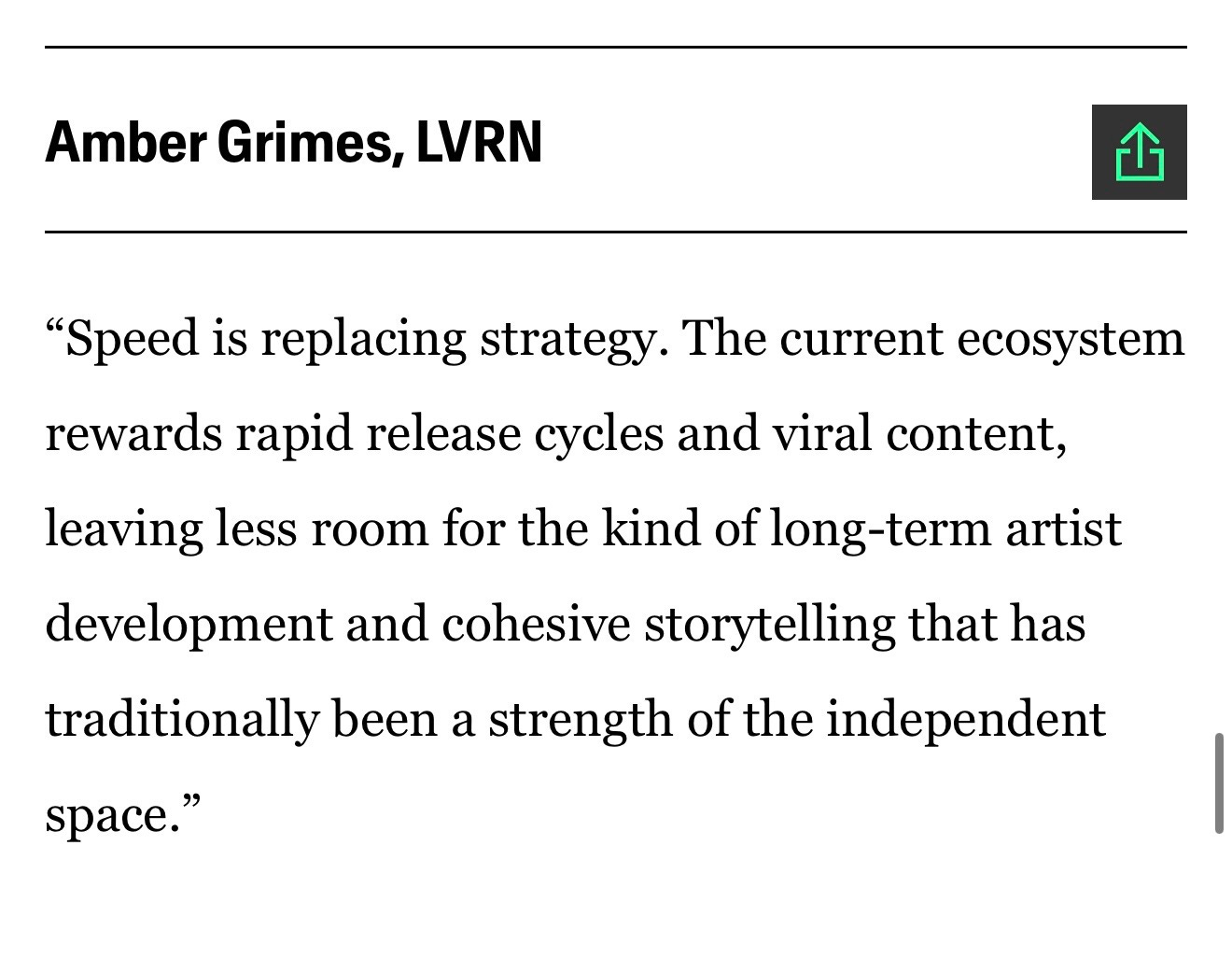
#2. Use the Tools and Build a Community. Today.
It doesn’t matter how small the room is, you need to be talking to the people in it.
“Day 1 fans” used to be reactive. An artist would blow up, and suddenly everyone was scrambling to prove they were there from the beginning and by then the artist was too big to even care. As an indie label or artist, you can’t afford that dynamic. You have to create and invest in your “Day 1’s” before the moment arrives.
Create a space for them. Talk to them. Reward them. Give them access. Flood them with content. Make them feel like they’re along for the ride…because they are.
The tools to do this exist right now and most people aren’t using them enough or at all:
-Broadcast Channels: Instagram handed us all a direct line to fans and put it inside the app we use the most. If you’re an indie artist or label not using this, you’re leaving community on the table.
- Laylo: great for direct fan messaging, creative marketing with an ROI, and drop alerts
- Co:Brand: Now this is one I was gatekeeping for a while (Can’t even lie but the jig is up lol) my favorite thing about it is it helps you actually identify who’s actually engaging with your music and sounds and you can execute amplification plans all in one place.
- EVEN: thanks to LaRussell, we’ve all seen what’s possible when you build a real ecosystem for your supporters to live in. I just used EVEN for the first time this year but you can release exclusive music and videos, community chat, create and sell special variants of your album, and so much more.
- Substack: one of the most underutilized artist tools right now. A direct and deeply personal email to your people, without an algorithm deciding who sees it and something to finally do with all that data you’ve been collecting and don’t use.
Nobody knows this community building journey better than our partners OVMBR and artist Odeal. Because we can track creators, when Odeal goes on tour we get a massive index of UGC from fans at the shows. We engage with their videos, we make fans feel seen, we pull content to share across his broadcast channel, his fan pages, shorts and so much more. We can identify early trends and reward people with new music, personal acknowledgment and access because we know exactly who they are. It’s been exciting to see how differently fans show up for Odeal on the internet and to his shows and meet and greets because they truly feel they discovered him, are apart of the team and are connected.
Ten fans will become ten thousand fan faster than you think. Make sure you’ve built them a home so they can get cozy when they arrive, if you want them to stick around for a while.
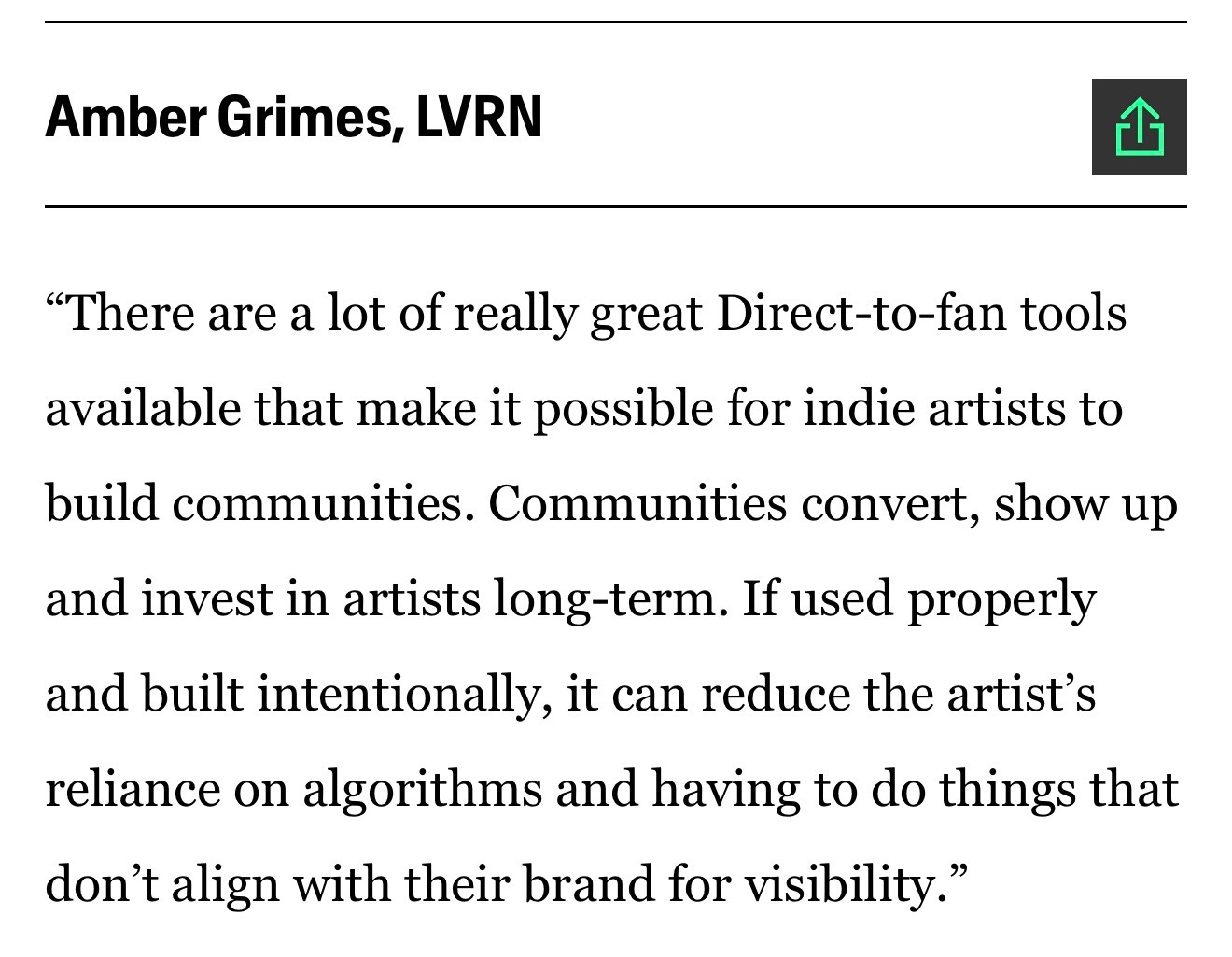
#3. You Cannot Afford to Be a Skeptic
Clipping has been around for a while. Streamers figured it out early. Justice on our team figured it out early and had us trying all types of things. And if you paid attention to how certain major label artists have been flooding your algorithm let’s just say independent artists weren’t the first ones to catch on. Now there are articles being written about it that your mom can read. Which means you're late.
By the time Billboard or the New York Times publishes a trend piece, you should already be the subject of it.
Independent artists and their teams have to be fearless visionaries. When you see something, you need to research it. Phone a friend. Ask around. Test it out with a ridiculously low budget. Choosing to be independent is choosing to try to make fire with sticks and stones. If you want a lighter, sign to a major. I know resources are limited when you’re indie, but creativity isn’t.
Understanding the concept of what clipping is, is free.
Instagram’s **Trial Reels** is a barely-discovered feature sitting right inside the app that I feel like no one is using. You don’t know what part of your song is going to land? Not sure what text on screen is going to get someone to stop scrolling? You too embarrassed to post that cringy trend to your own song? Put it all on Trial Reels. The results are real, the audience conversion when something works is significant, and the risk is low because the content only shows to non-followers. And if it works you have the option to share it with your followers and show them how awesome you are and that you were just buried in the algorithm lol.
Congratulations! you just became your own clipper.
LaRussell was an early adopter of EVEN and he went so hard it became apart of his artist brand. You cannot be afraid to embrace new ideas and be first. Who the hell wants to be second?
Don’t wait for permission from the old guard to try new things. By the time they write the article, you should be who they’re quoting. You should be a case study. You should be the success story.
Being independent is about being a leader. Not a follower with a distribution deal.
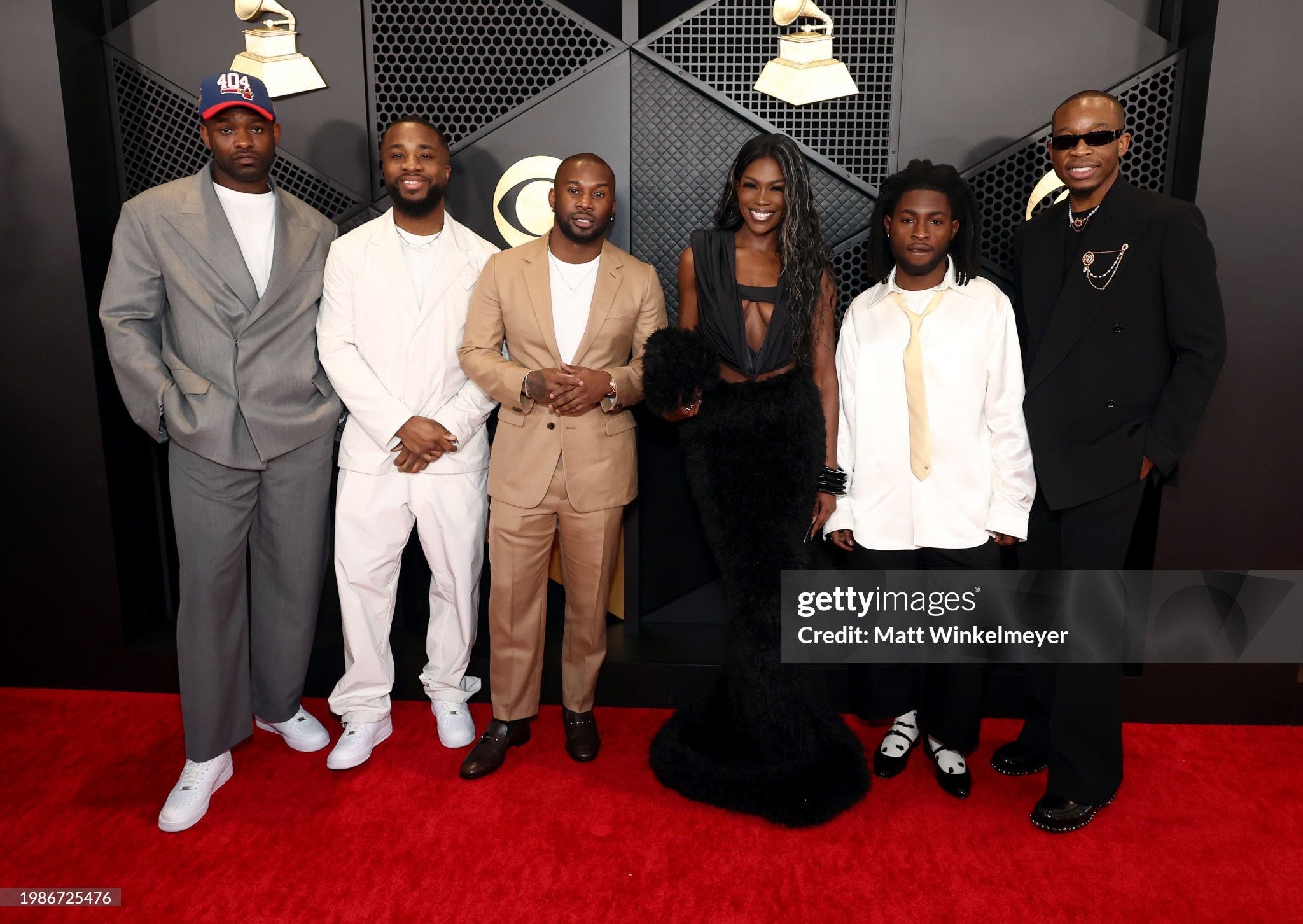
My team and I don’t know everything but we’re having fun and dressing well while we figure it out. I do know the indie space doesn’t reward the biggest budget. It rewards the clearest vision, the most authentic story and the teams willing to move before the rest of the industry catches up. Everything I’ve shared here we learned by doing it and by sometimes getting it wrong first. I’m growing and learning everyday but I think sharing should be apart of that process too. All the Indies are being tested and figuring it out in real time, let me see your paper 😂 and I’ll let you see mine.
The Queen 🙌🏾🙌🏾🙌🏾